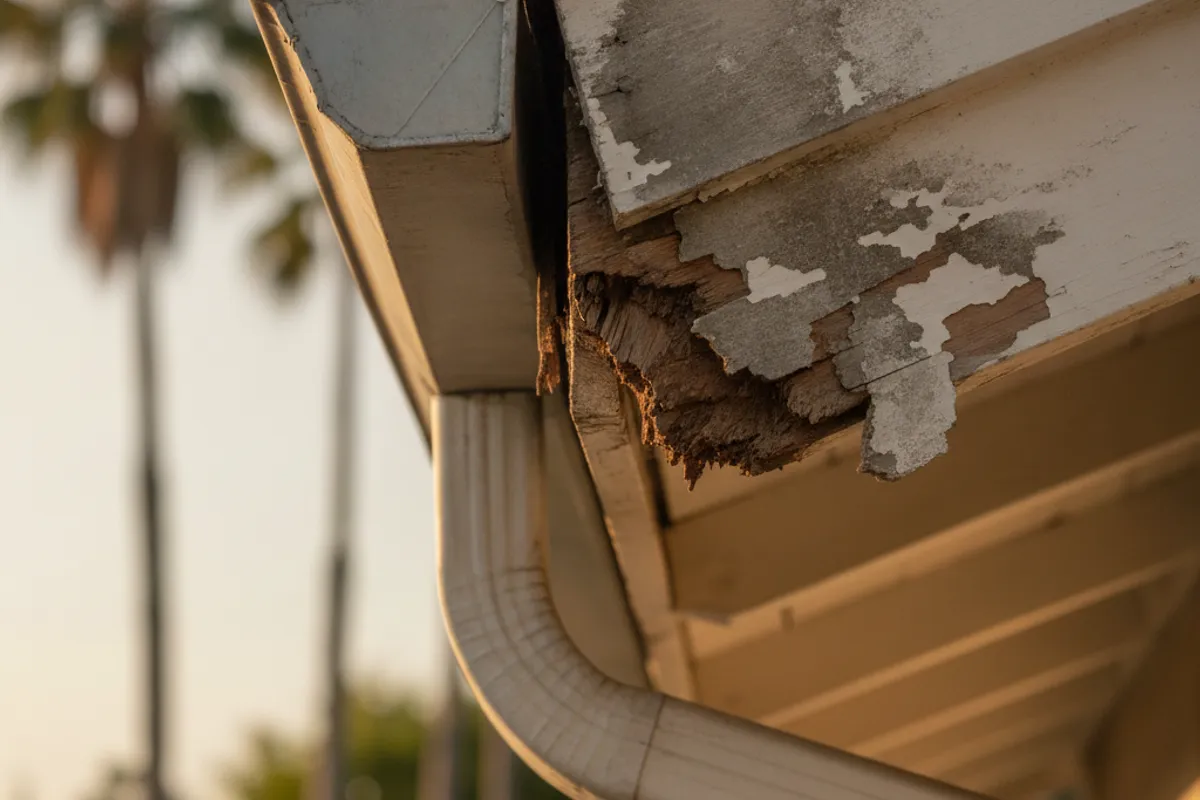
The fascia board is the horizontal trim board running along the lower edge of your roofline, directly behind the gutter. It is also the structure the gutter hangs from. When it rots, the gutter loses its anchoring, pulls away from the roofline, and can eventually bring sections of soffit with it. In San Diego, fascia rot is one of the more common and preventable problems that gutter contractors encounter.
How gutters cause fascia rot
A properly functioning gutter collects roof runoff and routes it to a downspout. When a gutter is clogged, overflowing, or pitched incorrectly so water pools in the channel, it keeps the fascia behind it perpetually wet. Wood fascia, which is what most San Diego homes built before 2000 use, cannot stay wet indefinitely without rotting.
The marine layer that settles along the coast and in many inland valleys keeps outdoor wood surfaces moist overnight even when it is not raining. A gutter that is already holding standing water, combined with overnight humidity, creates the sustained wet conditions that wood-rotting fungi need to establish and spread.
The rot often starts at the top back of the fascia where it contacts the back of the gutter, hidden from view. By the time you can see it from the ground, the damage has typically already progressed several inches into the board.
What fascia rot looks like and how to find it
From the ground, early signs include:
- Gutter sections that appear to tilt forward or sag at the outer lip
- Gutter spikes or screws that have pulled out and are visibly protruding
- Paint peeling or bubbling on the fascia face
- Dark staining on the fascia directly behind a gutter section
To check more closely, you need a ladder and a probe, which can be a screwdriver or a stiff wire. Sound wood is hard; you cannot press a screwdriver tip into it. Rotted wood is soft and will give way under moderate pressure. Work along the top of the fascia behind the gutter. Any area where the probe sinks in easily or the wood is spongy has active rot.
When to address it
Fascia rot should be repaired before new gutters are installed. Installing gutters over rotted fascia means the new system will pull out the same way the old one did, often within a few years.
The repair involves removing the gutter, cutting out the rotted section of fascia, installing new wood or composite fascia material, priming and painting to match, then reinstalling or replacing the gutter. In cases where the rot has spread to the rafter tails behind the fascia, the scope expands and may require a framing contractor.
Composite fascia as a long-term fix
Some homeowners, after dealing with fascia rot once, choose to replace wood fascia with a composite or PVC trim board. These materials do not rot, do not need painting, and are dimensionally stable. They cost more per linear foot than wood but eliminate the recurring maintenance issue. Ask your gutter contractor whether they offer this option or can refer a trim carpenter who does.
What repairs cost
Fascia repair ahead of gutter installation typically runs $4 to $12 per linear foot of damaged board, depending on the extent of the rot, material used, and whether rafter tails need attention. It is priced separately from the gutter installation itself, so make sure any gutter quote you receive includes a fascia inspection and a clear statement about whether the existing fascia is structurally sound enough to hold the new system.
A contractor who gives you a price without looking at the fascia is either assuming everything is fine (it may not be) or is not factoring in necessary work.
Gutter Works SD
Gutter Works SD is a referral service that connects San Diego County homeowners with insured, pre-screened gutter contractors. The contractors in our network assess fascia condition before starting any installation. Verify any California contractor’s license at cslb.ca.gov before work begins.
Call (858) 925-5546 or request a referral online. See our fascia and soffit repair service.