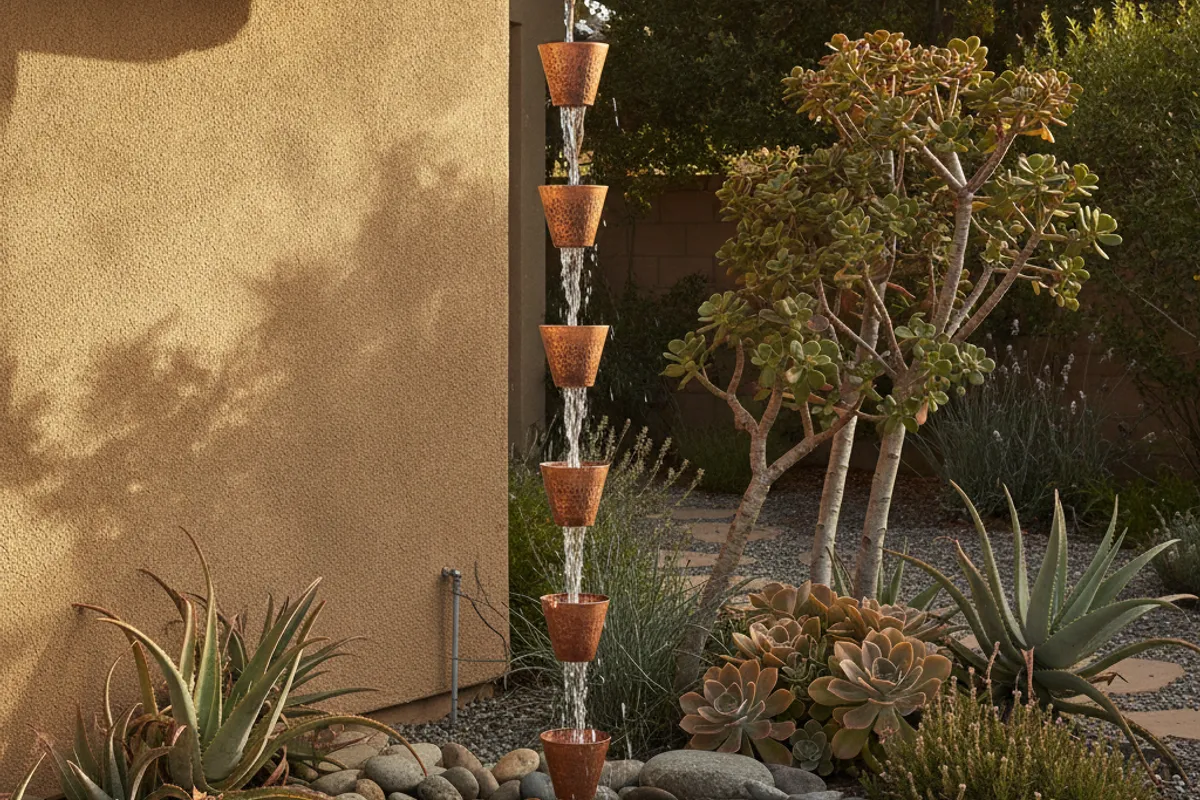
Rain chains are decorative alternatives to enclosed downspouts. They guide water from the gutter outlet down a chain or cup system to the ground, using surface tension rather than an enclosed pipe. Originally used in Japanese architecture for centuries, they have become a popular landscaping accent in Southern California yards, particularly on craftsman homes, Japanese-influenced gardens, and Spanish-style properties.
How they work
Water exits the gutter through the downspout outlet and is guided downward by a chain of linked cups or rings. Cup-style chains use small funnel-shaped cups that fill and overflow sequentially. Link-style chains, which look like oversized decorative chain, rely on water adhering to the metal surface as it cascades downward.
In light to moderate rain, both styles work well visually and functionally. They are genuinely effective at moving water away from the gutter outlet and directing it toward a basin, stone collector, or planting area at ground level.
Performance limitations in San Diego
San Diego receives relatively modest annual rainfall compared to most of the continental United States, which actually suits rain chains well in most conditions. Light to moderate rain moves gracefully down a cup or link chain.
Where rain chains can struggle is during the intense, concentrated storms that occasionally hit San Diego County in winter. A storm dropping more than half an inch per hour will overwhelm most rain chain systems. The water flow exceeds what the chain can surface-tension guide, and the overflow sprays outward rather than traveling down the chain. An enclosed downspout handles these events with no drama; a rain chain can turn into a water feature that splashes several feet from the installation point.
For this reason, rain chains are not ideal as the sole drainage solution for a large roof section. They work best at supplementary downspout locations or on smaller roof areas where the water volume is manageable.
What goes at the bottom
The discharge point matters. A rain chain dropping water onto bare soil against a foundation will saturate the soil and potentially create the same foundation moisture problems that poor downspout placement causes. Common solutions include:
- A decorative stone basin or vessel that collects and slows the water
- A gravel-filled dry well that allows water to percolate
- Connection to an underground drainage line at the base of the chain
- A planting bed specifically designed to absorb and use the water (a rain garden)
The ground-level solution should direct water away from the foundation, not toward it.
Installation
Most rain chains install by replacing the existing downspout with a simple hook or ring that connects the chain to the gutter outlet. Many come with installation hardware designed to fit standard downspout openings.
Installation is straightforward enough that a homeowner comfortable on a ladder can do it. The main consideration is the discharge point at the base, which may require more thought and occasionally some digging to route water appropriately.
Cost
Decorative copper rain chains run roughly $50 to $200 for a chain long enough to cover an 8-foot eave height, depending on cup size and chain weight. Aluminum and stainless options are less expensive. If you are connecting to an underground drainage system at the base, add the cost of that excavation and pipe work.
Where they fit in a San Diego gutter system
Rain chains are a reasonable choice as one or two decorative accent downspouts on a home that also has functional enclosed downspouts handling the primary drainage load. They add visual interest and, in a courtyard or garden setting, the sound of falling water during San Diego’s rare rain events is a genuine pleasure.
They are not a substitute for a complete downspout system on a home with significant roof area or any roof section where high-volume drainage is needed during winter storms.
Gutter Works SD refers San Diego County homeowners to insured gutter contractors who can help plan a drainage system that balances function and aesthetics. Call (858) 925-5546 or request a referral online. See our rain chains service page for options.